Cart abandonment in MENA — the recovery math no one is talking about
A scenario-driven look at why MENA e-commerce loses customers between intent and purchase, why the standard recovery toolkit underperforms in the region, and how mobile identity intelligence changes what is possible.
Let me walk you through a scenario that the e-commerce team at almost every MENA retailer has lived through, often without knowing they lived through it.
The scenario
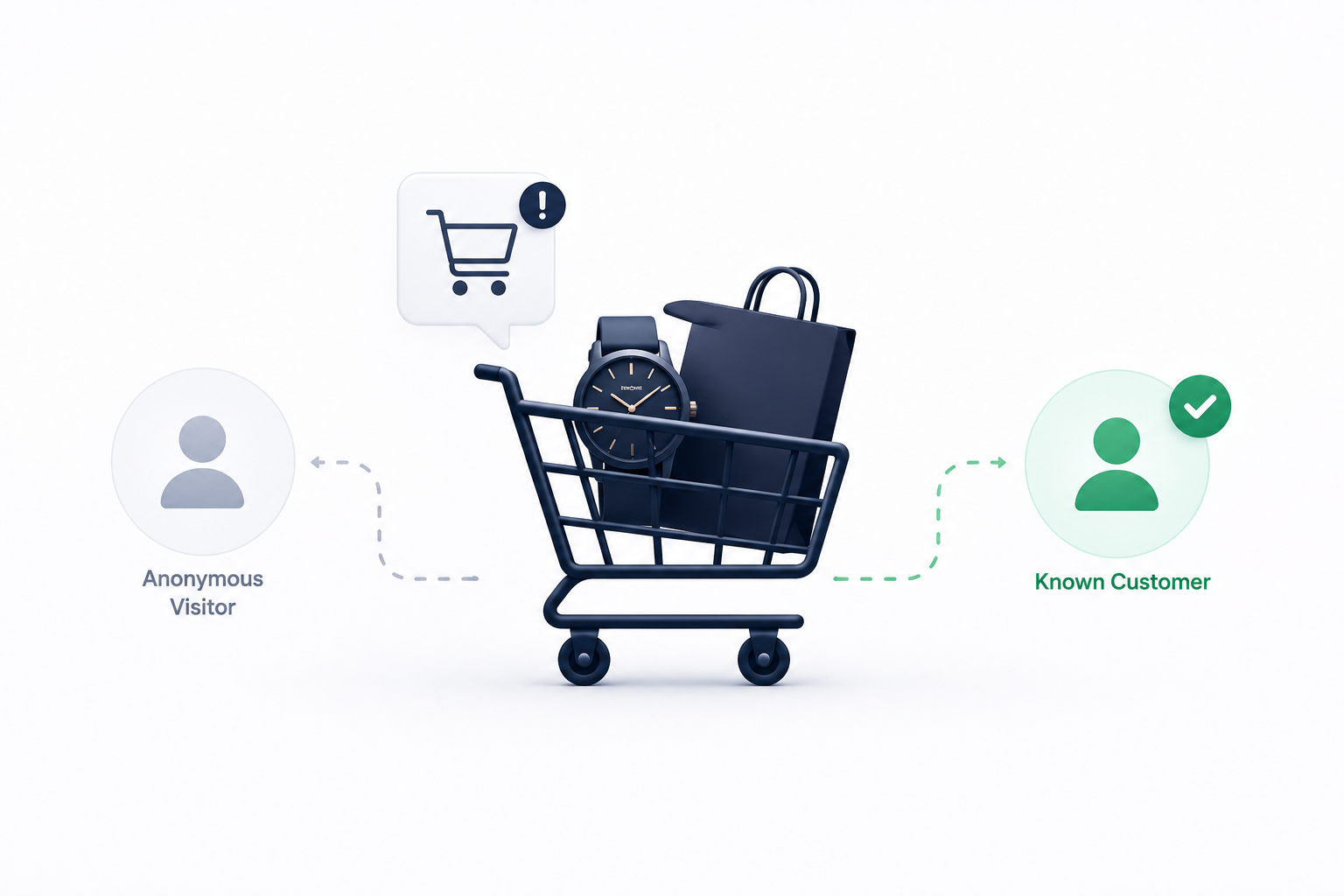
Tuesday evening, 9:47 PM Amman time. A customer is browsing a luxury watch on a MENA e-commerce site. They have been on the product page for four minutes. They have scrolled through the gallery, opened the size guide, read two reviews, and added the watch to their cart. The cart is $4,200.
They tap "Checkout." The site asks them to sign in or continue as a guest. They tap sign-in. The site asks for their mobile number. They type it. The SMS code does not arrive within 15 seconds. They tap "resend." Still nothing. They open WhatsApp because they got a message from a friend. They reply. They put the phone down.
The site has no idea who they were. The cart sits unattended. The retargeting pixel fires, eventually, against an audience the customer has already opted out of on iOS. The cart-recovery email goes to an address the customer never gave because they never finished signing in. The watch is still in the cart Wednesday morning. By Wednesday evening the cart has expired and the watch is back in stock.
This customer was real. The retailer paid roughly $14 in paid acquisition to get them to the product page. They were going to pay $4,200. They left with no record of who they were. The total recoverable revenue from that session, with the legacy toolkit: zero.
Why the legacy toolkit is missing the recovery
The standard cart-recovery playbook is built for a different internet:
- Email re-engagement requires an email address. The customer in the scenario above never gave one.
- Retargeting pixels require a cookie or device graph. Both are degraded on modern iOS and Android, both in MENA and globally.
- In-app push notifications require an installed app and an opt-in. Most first-time visitors have neither.
- Cart-restoration cookies restore the cart if the customer returns. They do not bring the customer back.
- Live-chat handoff requires the customer to engage. The customer in the scenario above never engaged.
Every one of these tools requires the customer to have already crossed a line that identifies them. The customer in our scenario never did.
What changes with mobile identity intelligence
Now run the same scenario with mobile identity intelligence active under prior consent:
The customer taps "Checkout." Instead of being asked for a number and an SMS code, their mobile identity is recognized in the background — under the consent posture they established the last time they shopped on this site, or via the brand's opt-in cookie banner the first time they ever visited. The recognition produces an outcome the retailer's CRM understands: "this returning visitor is Sara K., last purchase 90 days ago, currently looking at the luxury watch."
The cart-abandonment branch now has options:
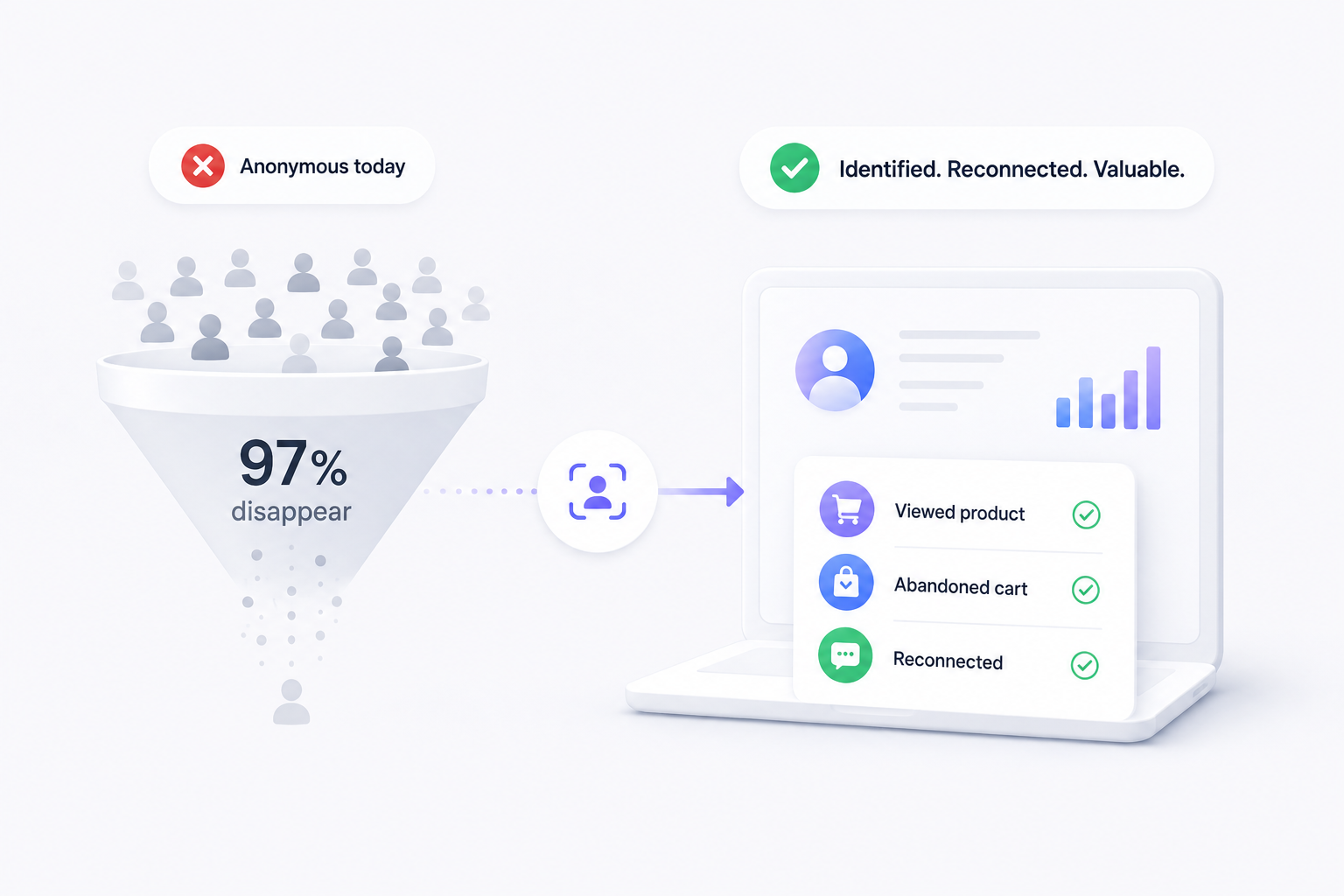
- The cart is no longer anonymous — it is attached to a known customer record.
- The retailer's CRM can reach Sara on the verified mobile channel she trusts.
- The recovery message is brand-aligned, in Sara's preferred language, with the watch in it.
- The recovery happens within minutes, while intent is still high — not the next morning, when the urgency is gone.
This is not a different marketing tool. It is a different category of customer visibility.
The numbers behind the recovery
For MENA e-commerce operators we have measured:
- 3 to 5 percentage points of additional completed transactions on previously- abandoned carts in the first 90 days of deployment.
- 35 to 60% of abandoned-cart sessions become identifiable when the consent posture is established correctly.
- 2 to 4× higher recovery-to-conversion rate on identified carts versus anonymous-only recovery attempts.
- Order value on recovered carts trends 8–15% higher than the operator's baseline average — partly because cart abandonment is concentrated at higher price points where the customer was more cautious.
For a retailer doing $20M in annual revenue at a 2% conversion rate, recovering a single percentage point of previously-anonymous high-intent traffic is one of the largest revenue levers the team can ship in a year. It is also one of the simplest to deploy — most operators run the pilot on a single category (electronics, luxury, watches) and expand outward once the numbers prove themselves.
Why MENA specifically
A few region-specific factors that make mobile identity intelligence particularly high-leverage in MENA:
- Mobile-first traffic. More than 70% of e-commerce traffic in most MENA markets is on mobile devices. The mobile identity is the customer identity.
- Lower email engagement. Email open rates in MENA are typically 30–50% lower than the global average. Email-only recovery has a smaller maximum lift.
- Higher SMS abandonment. SMS OTP, the most common identity gate in MENA, has the highest abandonment rate in the region's largest segments (multi-SIM customers, roaming Gulf travelers, customers with aggressive spam filters).
- WhatsApp is the dominant messaging channel. Recovery messaging on WhatsApp has open rates 3–6× higher than email in most MENA markets. Identifying the customer is the prerequisite to using it.
The combination — mobile-first + email-weak + SMS-friction + WhatsApp-strong — means that identity recognition is more valuable here than in markets where email and desktop carry more of the conversion weight.
What the rollout actually looks like
Three things move in the first three months of a typical deployment:
Month 1. Audit-only mode. Identify visitors, log the identification, do not act on the data yet. The retailer's team validates that the consent posture is right, the recognition rate is plausible, and the operations team is set up to use the data.
Month 2. Single-flow activation. Pick the highest-intent abandonment surface (usually checkout or cart) and route identified abandoners into a recovery flow. Measure conversion lift, recovery cost, customer NPS on the recovery message.
Month 3. Expand to additional flows. Browse abandonment (long session, no add to cart). Wishlist follow-up. Re-engagement of dormant identified customers. The CRM team starts running recovery as a discipline rather than an ad-hoc effort.
By month four, the team is usually asking a different question: not "should we identify visitors?" but "which visitor moments do we still need to enrich, and what should we do with the audience we have built?"
The privacy posture
This entire mechanism depends on consent. Mobile identity intelligence is not a license to identify anyone who lands on the site. The customers who become identifiable are the ones who have an existing consent relationship with the brand:
- A previous verified interaction (sign-in, purchase, account creation).
- An opt-in to mobile identity recognition (typically presented at first visit in a way that explains what the brand can do with the recognition).
- An explicit consent context the brand has established through its own consent management.
A customer who has never engaged with the brand under consent is not in scope for recognition. The platform is regulator-aware by design — PDPL, GDPR, the emerging UAE data law — and the consent posture is the precondition for everything that follows.
This is also the reason the recovery feels natural to customers rather than intrusive: the customer is being remembered, not surveilled. The brand recognizes them because they previously said it could.
What to look at next
If you are running an MENA e-commerce operation and the scenario at the top of this post sounds familiar, two next steps usually move things:
- Get a measurement of your identifiable audience under consent. Most operators are surprised — the number of returning visitors who would be identifiable with correct consent posture is typically 2–4× what the existing CRM record count suggests.
- Pick one abandonment surface to pilot. Don't try to instrument the whole site at once. The math is cleanest when you can compare the same surface before and after.
The Authmatech solutions team will model the identifiable audience on your own traffic and walk through the privacy posture in detail. The conversation starts with the data, not with a deck.
The shorter version: MENA e-commerce loses a disproportionate amount of intent between cart and conversion, because the legacy recovery toolkit was built for an internet where email and desktop carried more weight than they do here. Mobile identity intelligence, deployed under consent, is the recovery tool that fits the region. The math is unforgiving in both directions — but for any operator with real traffic, the recovered revenue is large enough to justify the pilot in the first quarter.