Why SMS OTP is broken in 2026 — and what enterprise teams use instead
SMS one-time codes are slow, expensive, abandoned, and increasingly insecure. Here is what the current generation of enterprise identity teams is replacing them with — and why mobile network identity intelligence is the answer.
For more than fifteen years, SMS one-time codes have been the default way the internet asks customers to prove ownership of a phone number. You enter your number, an SMS lands on your phone, you read the code, you switch apps, you type the code back, you wait for the server to accept it, and — if everything cooperates — you continue. That flow shipped in an era when SMS was a credible second factor. In 2026 it is the single most-abandoned step in most enterprise sign-up funnels. This post explains why it broke, why the patches no longer hold, and what the current generation of enterprise identity teams is doing instead.
The numbers behind the abandonment
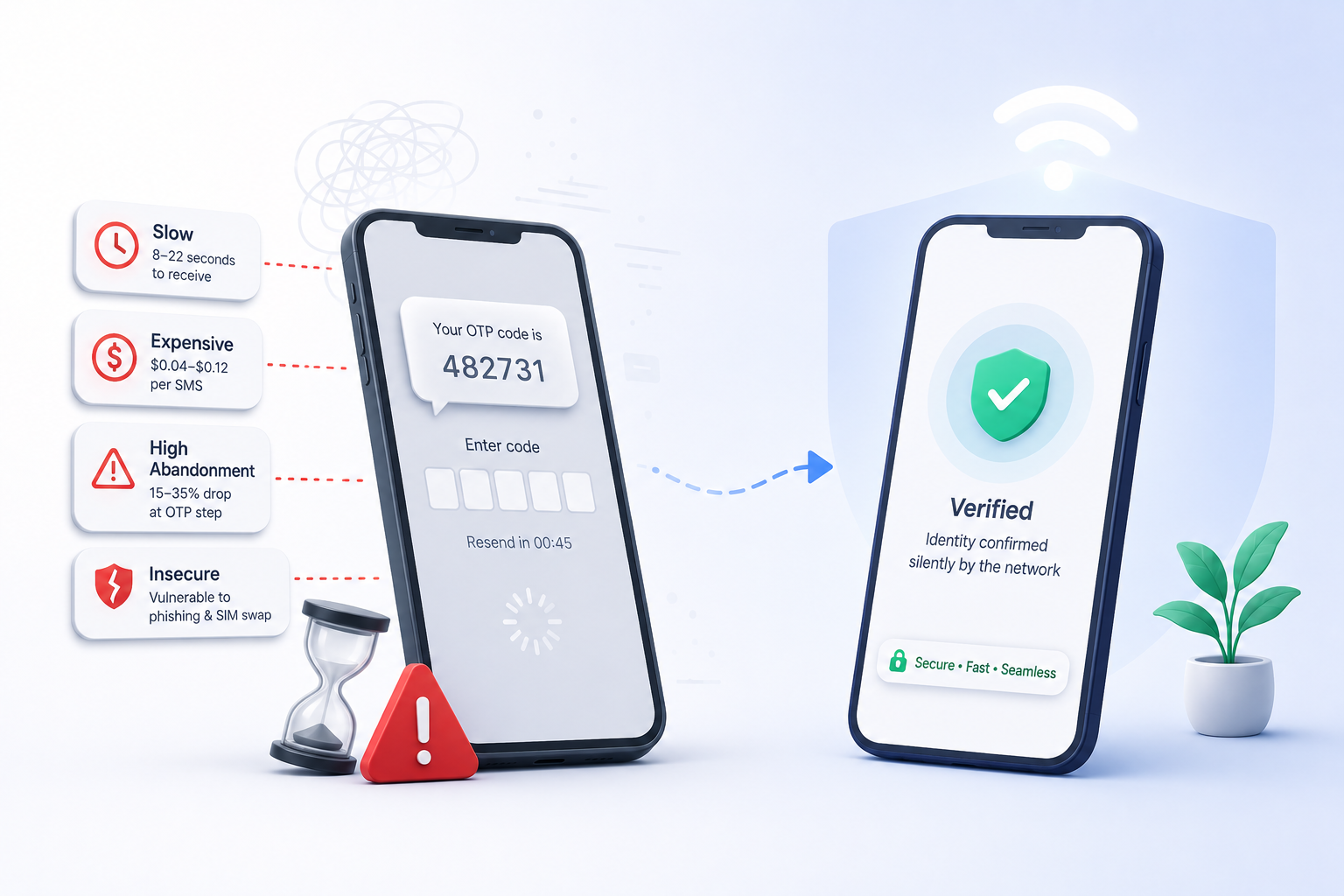
The honest part of the OTP story is that every enterprise that measures the funnel already knows it leaks. The OTP step typically drops between 15% and 35% of the customers who reach it, depending on the channel, the time of day, the country, and the carrier. Sign-up flows that ask for an OTP twice — once at registration, once at first login — compound the loss. In MENA markets where roaming, multi-SIM, and aggressive spam filtering are normal, the abandonment rate sits closer to the top of that range.
The numbers worth keeping in mind:
- 15–35% of customers abandon at the OTP prompt across modern consumer flows.
- 8–22 seconds is the median time from "request OTP" to "code accepted" — long enough for a customer to switch apps, get distracted, and not come back.
- 3–8% per attempt of OTP messages are never delivered. The customer requests another code, abandons, or churns to a competitor.
- $0.04–$0.12 per SMS to MENA carrier networks, with peaks during outages. Multi-million-customer apps quietly run a six- or seven-figure annual SMS budget that most product teams never see on a dashboard.
None of these numbers is new. What is new is that the alternatives finally exist at enterprise scale.
Why patches stopped working
Every team that owns OTP infrastructure has tried the same patches in the same order. The patches address symptoms; they cannot address the structural problem that the customer is being asked to stop what they are doing, leave your app, retrieve information from another app, and come back. A few of the most common patches and why they plateaued:
- Auto-fill from SMS. The platforms shipped this years ago. It helps on the same device, but the abandonment did not collapse — customers still wait for delivery, still switch context, still lose the page.
- Switching SMS providers. Each provider promises better deliverability. In practice delivery improves a percentage point or two and then the same plateau returns, because the bottleneck is not the SMS pipe.
- Pre-warming the OTP. Some teams pre-send the OTP before the user finishes typing the number. This raises delivery rate slightly and trades it for higher cost and a noticeable smell test from regulators in markets where the user must explicitly ask for the code.
- Multi-channel fallback. Send via SMS, then WhatsApp, then voice call, then email. Cost balloons, the customer waits longer, and the experience now varies wildly between customer segments. The funnel reports look better; the conversion does not.
- Reducing the OTP to four digits. Marginal latency improvement, small security downgrade, no impact on abandonment.
The reason these patches plateau is that the customer is still being asked to perform a context switch. Every patch optimizes the speed of the switch. None of them remove the switch.
What replaces OTP at enterprise scale
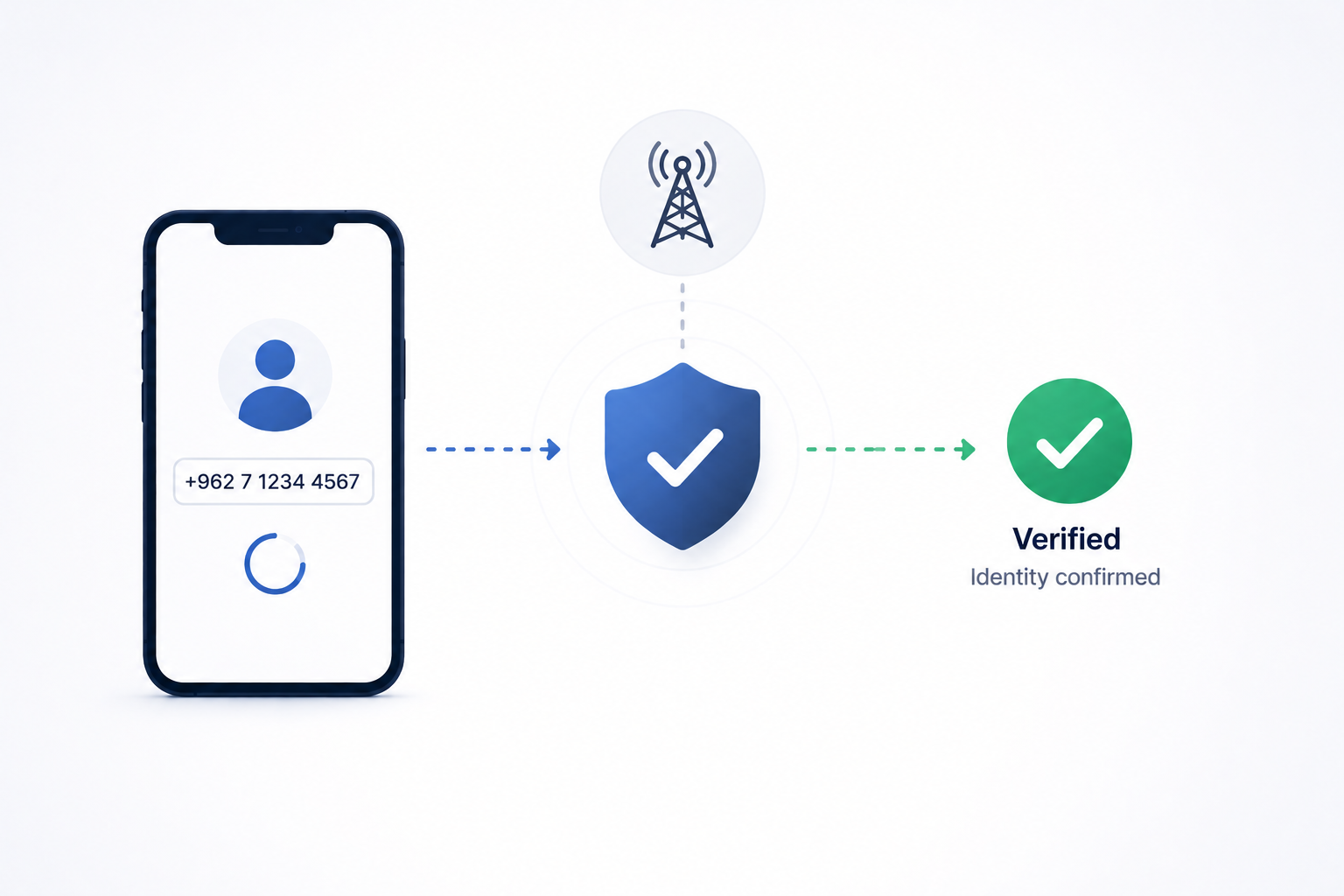
The category that is finally replacing SMS OTP at enterprise scale is silent mobile identity verification — also called silent network verification or carrier authentication. Instead of generating a code, sending it over SMS, and asking the customer to type it back, the platform confirms in the background that the device making the request is actually associated with the mobile number the customer claims. The customer enters their mobile number, a tap continues, and identity is confirmed by the mobile network itself.
The shift matters because it changes the unit economics, not just the experience:
- Conversion lift, not just smoother UX. Removing the OTP step typically lifts sign-in completion by 8 to 12 percentage points in flows that previously sent an OTP. That is not a UX polish, that is revenue.
- No per-message cost. A predictable identity fee replaces a variable per-SMS bill. At scale, this is the single largest line-item improvement on the customer-experience P&L.
- Phishing-resistant by construction. A silent verification cannot be phished out of the customer — there is no code to capture, no link to misdirect, no second factor for an attacker to relay.
- Audit trail with identity context. The platform delivers a verified identity outcome with carrier-level context, not "user typed the digits we sent them." Compliance teams notice this immediately.
For teams that need a manual fallback — VPN users, customers on Wi-Fi without carrier signal, foreign roaming SIMs — the modern stack supplies one. At Authmatech this is Stuck+: when the silent match cannot complete, the customer sees a single "unlock" button to submit their mobile number manually, and the verification still runs through the verified identity path. The customer never gets blocked on a failed silent attempt.
What the OTP-replacement project actually looks like
Teams that have done this migration cleanly tend to run it in three stages, not as a single big-bang cutover:
- Shadow mode. The new silent verification runs in parallel with the existing OTP, without touching the customer experience. The team compares conversion, latency, and identity outcomes for two or three weeks. The shadow telemetry is where the conversion case for the cutover is built.
- Per-segment cutover. Start with the highest-friction segment — typically new customer sign-ups on mobile devices. Move them to silent verification with the manual fallback in place. The OTP code path is dark for these users; if anything breaks, the feature flag rolls them back.
- Decommission. Once the silent path proves itself across segments, OTP is removed from the live flow and kept only as a break-glass option. Most teams complete the removal within one quarter from first integration.
The integration itself is narrow. Silent verification replaces the OTP step at a single point in the funnel; everything else in the customer journey stays unchanged. The teams that worry about a year-long replatforming project usually finish in weeks.
What to look at next
If you are in the middle of the OTP-replacement question, two posts on this blog go deeper:
- How silent mobile number verification actually works (the carrier-level deep dive)
- The hidden cost of SMS OTP — what enterprise teams underestimate
And if you want a concrete walkthrough on your own funnel, the Authmatech solutions team will sit on a call, look at your numbers, and tell you whether the move is worth doing. The answer is honest — sometimes it is not the right quarter, and we will say so.
The shorter version of the entire post: SMS OTP was the right tool in 2009 and is the wrong tool in 2026. The replacement is no longer experimental; it is in production at enterprise scale across MENA. The teams that adopt it first turn an abandonment problem into a conversion advantage.